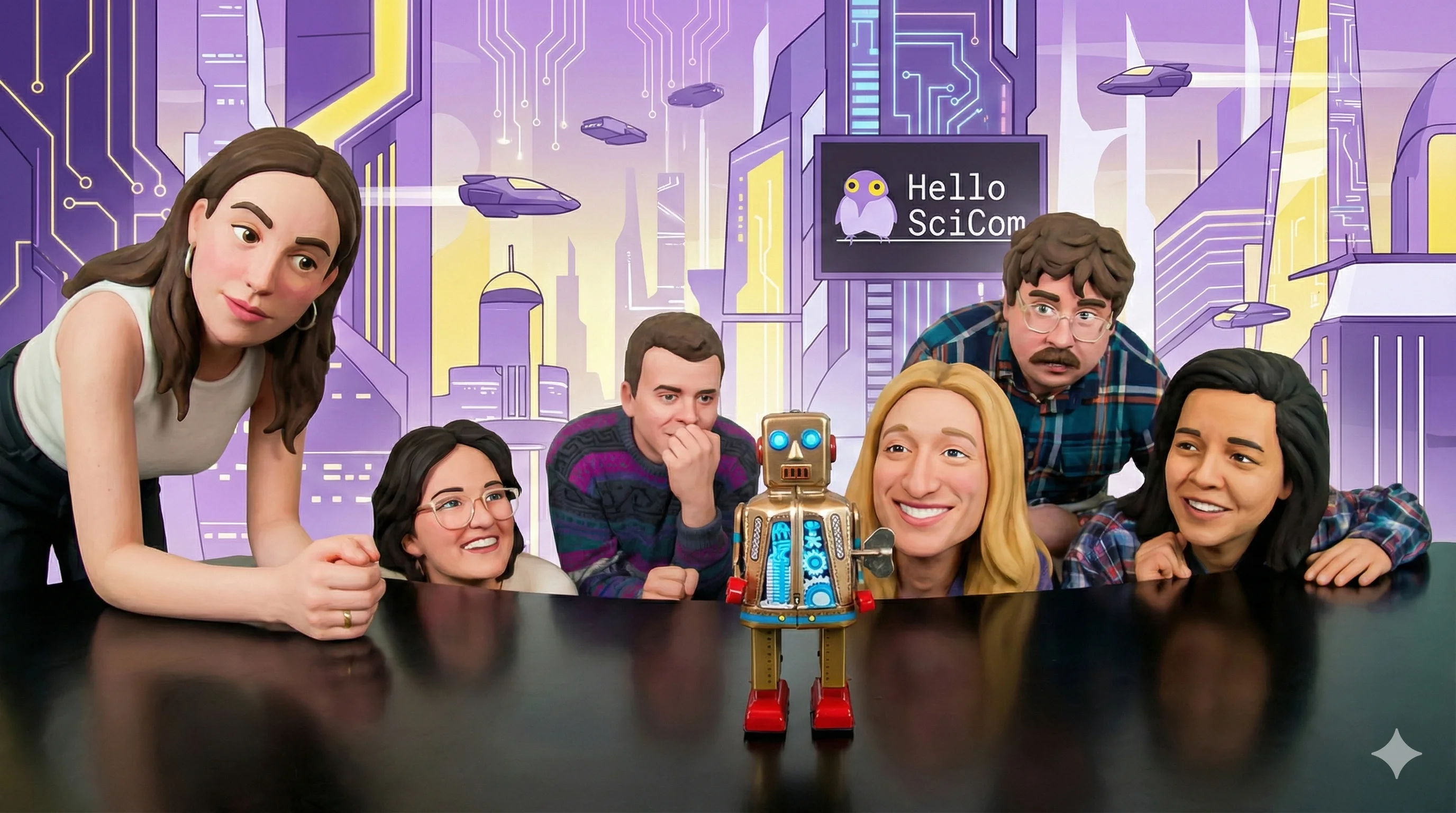
We use AI tools to expand what’s possible, automate wherever human brains are not required, and spend more time where humans matter: strategy, taste, and truthful storytelling.
We think of AI like many paradigm shifting tools: from the internet to the invention of fire. It is a tool to let humans be a more human version of ourselves.
We believe AI is our collaborator, not our competitor. We use AI to augment our creativity and to automate our admin. We’re optimistic about AI. But not naive. We use it to brainstorm but we don’t turn our brains off.
We don’t treat AI as a replacement for creativity. We treat it as a new kind of collaborator: one that’s fast, surprising, tireless, and occasionally very confident about something that is… completely wrong. That’s why our approach is human-led. Our job isn’t to “generate content.” It’s to create meaning—and to do it responsibly.
With as few em-dashes as possible.
Instead of focusing on replacement, we focus on new creative capabilities AI makes possible:
Because we work in science and technology, accuracy is part of the craft. We don’t publish “AI guesses” as facts. When a claim matters, we verify it. When something can’t be verified quickly, we flag uncertainty rather than bluff.
We take confidentiality seriously. If a project has restrictions (NDAs, regulated info, internal metrics, unreleased product details), we adapt our workflow and minimize what goes into third-party tools. If you want AI-limited or AI-free work, we can do that, just know it typically trades speed for process.
We don’t use AI to generate generic content.
Unlike AI, Hello SciCom is also extremely in-person and performance-forward when the project calls for it. We can:
For now, AI and robots cannot do these things so we are at your service!
Hello SciCom isn’t new to AI. We’ve been building in it for years. We’ve coauthored peer-reviewed research with Honda Research Institute on social robot dialogue (including small talk, voice, and comedic timing). We’ve developed and written AI-focused series work (including Cloudflare’s AI Avenue).
We’ve also collaborated with OpenAI on public-facing creative workflows, and Sarah has spoken at Harvard’s CS50 about how professional writers use AI in practice. And yes—Sarah literally lived with a humanoid robot during lockdown, which permanently raised our bar for what “human-machine collaboration” can feel like.
We use AI to be faster and broader. We use humans to be better.